
Oman’s Gamble on Smart Cities
Sultan Haitham, Al Khuwair, and the Unfinished Business of Urbanism

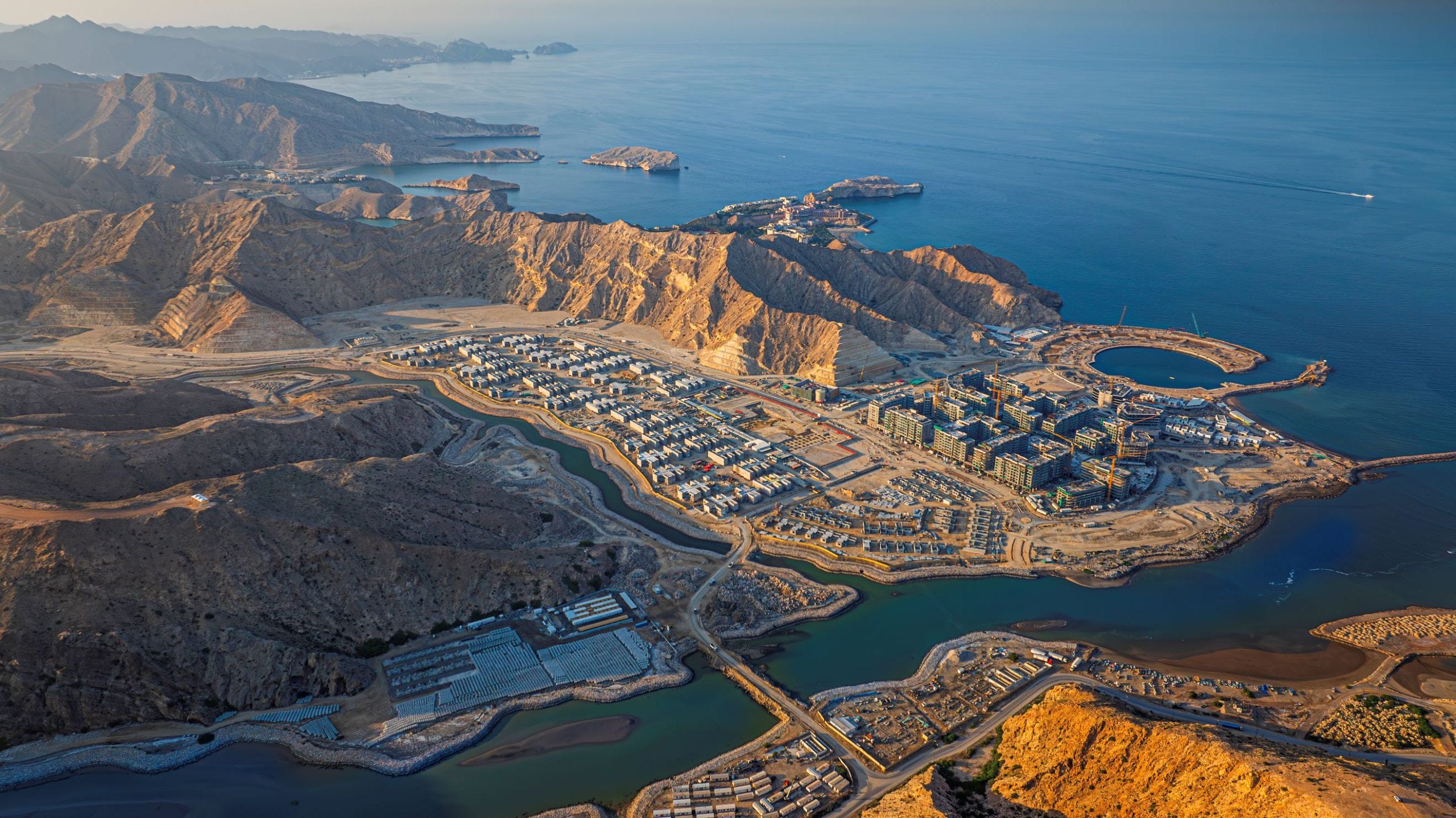
The future of cities isn’t a thought experiment anymore—it’s a high-stakes bet, and Oman has just gone all-in. The Sultanate, long defined by its measured, almost conservative approach to modernization, is now accelerating into the global smart city race. Three major projects—Sultan Haitham City, Al Khuwair Downtown, and The Sustainable City Yiti—represent Oman’s commitment to an urban future where sustainability isn’t an afterthought, but a first principle.
These projects are different from the glittering promise of NEOM, the vertical ambition of Singapore, or the hyper-planned techno-utopias of China. They are, at least on paper, cities designed for people first. Yet, as history has shown, no urban master plan survives first contact with human nature. The question Oman now faces is whether it can build smart cities that don’t just function, but live—whether it can sidestep the pitfalls that have turned too many "cities of the future" into sterile showpieces of ambition over adaptability.
Sultan Haitham City: The State’s Legacy Project
The sheer scale of Sultan Haitham City makes it clear that this is more than just another urban expansion—it’s an attempt to rewire the DNA of Muscat’s urban experience. Covering 14.8 million square meters, the city is divided into 19 distinct neighborhoods, housing 100,000 people in an environment supposedly optimized for livability, walkability, and green infrastructure. It’s a top-down, state-driven vision of the city, designed as a model for sustainable urbanization in the region.
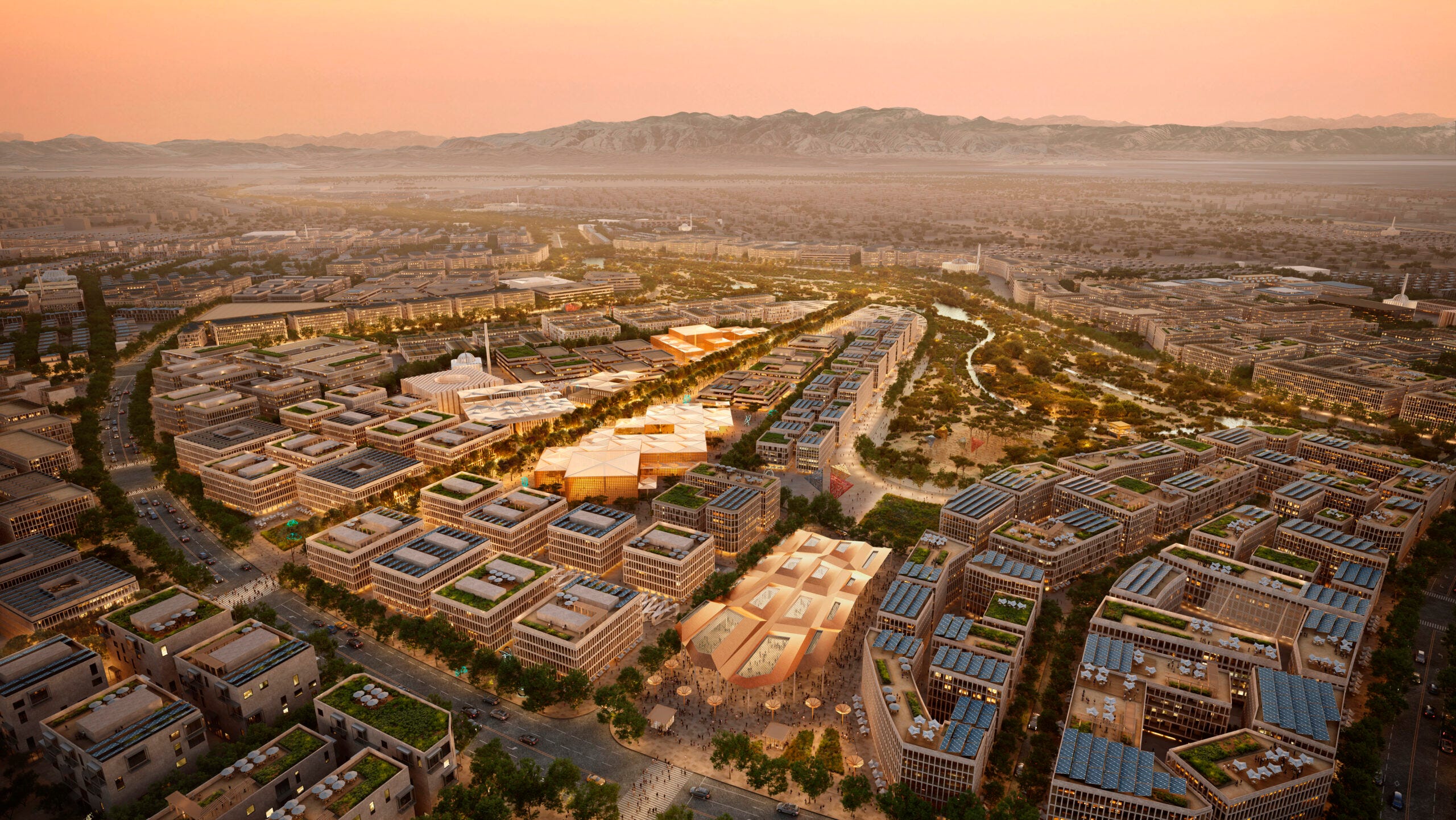
At its heart is the Central Green Spine, a nearly 3-million-square-meter network of public spaces, gardens, and pedestrian pathways designed to bring nature back into the urban fabric. A 1,200-bed hospital, 30 public schools, and a 95% preservation rate of natural land suggest a seriousness about creating a city where quality of life is paramount. The project, launched in 2024 and set for completion in 2030, is supposed to provide an alternative to Muscat’s increasingly car-dependent, sprawling development.
But let’s step back for a second. This isn’t the first time a government has promised a people-first city. What happens when the renderings meet reality? Will people actually want to live here, or will it become another master-planned ghost town? Urban history is littered with state-backed megaprojects that looked great on paper but failed to attract real communities. Sultan Haitham City will need more than sustainable buzzwords—it will need to generate an authentic urban rhythm that can’t be dictated by planners alone.
Al Khuwair Downtown: The Zaha Hadid Experiment
Al Khuwair is a different beast. It’s not a city built from scratch but a radical reinvention of Muscat’s downtown, incorporating Zaha Hadid’s architectural imprint and a delicate balancing act between ancient wadis (dry riverbeds) and modern canals and waterways. With a planned 64,500-person population, it’s an attempt to densify and modernize Muscat’s urban core while integrating a green and blue infrastructure approach—waterways and greenery serving as both aesthetic elements and functional climate mitigation tools.
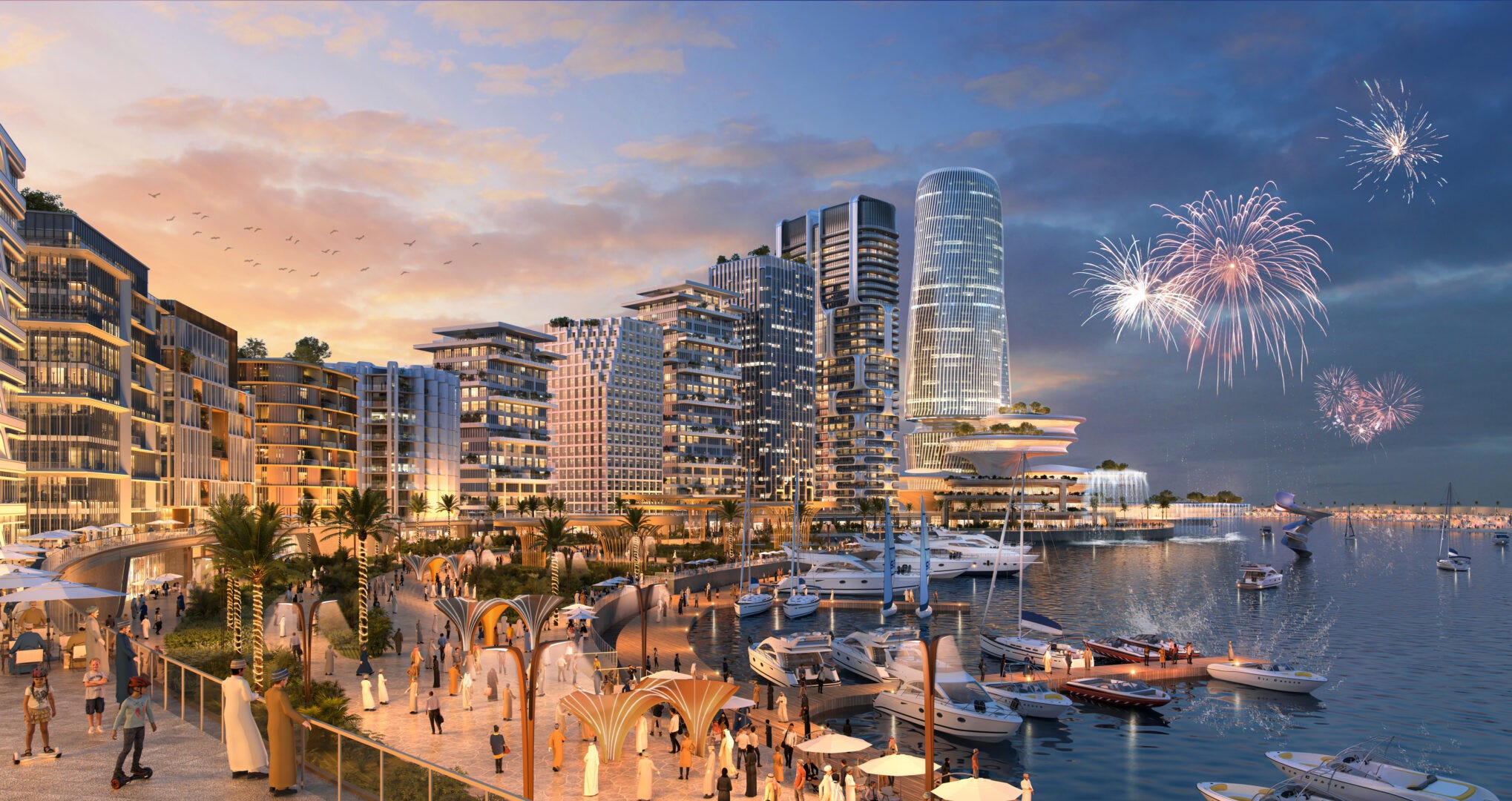
Cities built too much for efficiency and not enough for messy human interactions tend to fail at feeling alive. Al Khuwair Downtown has a shot at avoiding that fate—if it embraces unpredictability. The question is whether it will allow the organic, improvisational qualities of urban life to take root, or whether it will end up as just another perfectly optimized, yet oddly soulless cityscape.
The Sustainable City Yiti: A Self-Sustaining Microcosm
Then there’s The Sustainable City Yiti—Oman’s most explicit attempt at creating a self-sufficient, net-zero urban model. Unlike Sultan Haitham or Al Khuwair, this project has already built 93% of its infrastructure, with homes selling out fast and a planned 2026 full launch.
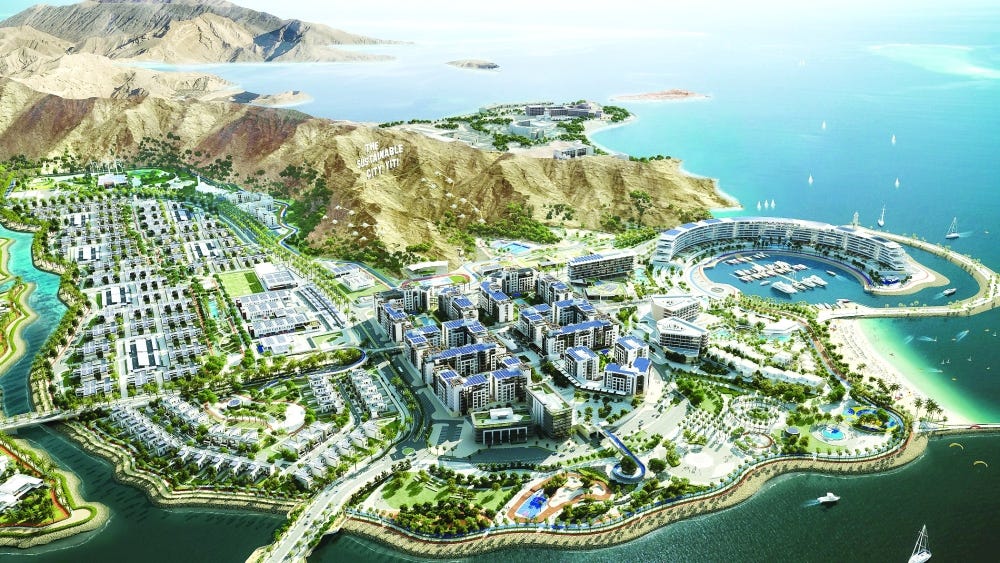
The city is designed around a waste-to-energy circular economy, where 80% of food is grown locally via urban farms and hydroponic systems. This is Oman taking notes from the success of Dubai’s Sustainable City model and attempting to scale it into something even more self-reliant. Micromobility and walkability are foundational, meaning that Yiti won’t be another Gulf city where car dependency kills the urban experience before it begins.
But here’s the tension: self-sufficient cities often feel isolated, like islands detached from the urban world around them. Will Yiti become a real economic and cultural hub, or will it be more of a niche community—a utopian enclave that never quite integrates with the larger urban ecosystem?
The Bigger Picture: Oman’s Post-Oil Future
These projects aren’t just about building cities—they’re about economic survival. Oman knows that the decline of oil over the next 20 years is inevitable, and smart urbanization is part of its strategy to pivot toward a tourism-driven, knowledge-based economy.
Tourism is already showing signs of acceleration. Oman saw 3 million visitors in 2023, a 40% increase over the previous year. It’s clear that the country is leveraging its natural landscapes—mountain tourism at Jabal Al Akhdar, high-altitude wellness retreats, and historical preservation—as part of a broader strategy to diversify beyond hydrocarbons.
And then there’s the social transformation quietly happening beneath all this—new roles for women in the workforce, localized decision-making for communities, and a greater emphasis on human capital as Oman’s true resource. It’s a shift that Gulf nations are facing at different paces, but Oman—long the most reserved, least flashy of its neighbors—might be playing the long game better than anyone else.
Can Oman Get It Right?
The biggest test for these smart city projects won’t be in their construction, but in their adaptation. Will Sultan Haitham, Al Khuwair, and Yiti evolve as living, breathing cities, or will they become over-planned environments that struggle to attract a critical mass of residents?
NEOM, Masdar City, Songdo, and even Singapore’s high-tech urban experiments have all shown that no matter how advanced your planning is, cities ultimately belong to the people who inhabit them. Oman’s smart city ambitions will succeed only if they can foster real, self-sustaining urban cultures—not just futuristic infrastructure.
But there’s something different about Oman’s approach. Where Dubai builds for spectacle, Saudi Arabia builds for geopolitical leverage, and China builds for control, Oman seems to be building for resilience. These aren’t just smart cities in the tech-utopian sense; they’re an attempt to create cities that will outlast the end of oil, cities that will function even when the world shifts in unpredictable ways.
Oman is shaping its cities with a focus on community-driven urbanism, ensuring that local stakeholders have a meaningful role in decision-making. Unlike my experience at NEOM, where planning was heavily centralized, Oman’s approach prioritizes direct engagement, allowing communities to influence their own futures in tangible ways.
In Muscat, MCTspaceLab has been engaging residents since 2017, using workshops and collaborative design sessions to shape public spaces based on real needs rather than external assumptions. Oman Think Urban expands this concept further, working to incorporate local insights into planning and policy. These initiatives ensure that urban development is informed by the people who live there, creating environments that are functional, adaptable, and rooted in lived experience.
Tourism development follows the same principles. The Ghudu initiative, led by Omani women, collaborates with tribal communities in Dhofar to create tourism experiences that support cultural preservation and economic sustainability. These efforts ensure that heritage remains a dynamic, evolving force that directly benefits the people who uphold it. Tourism is not only a driver of economic growth but a mechanism for empowering communities to define how they share their culture with the world.
Oman’s National Urban Policy reinforces this commitment by embedding community engagement into long-term planning, allowing local voices to shape socio-economic and environmental priorities. Research supports this approach, demonstrating that cities built with active stakeholder participation are more sustainable and resilient. This strategy reflects a deeper understanding of how urbanization can be both innovative and human-centered.
These developments show a different way of thinking about smart cities, one that goes beyond technology and infrastructure to focus on the role of people in shaping their own environments. This model recognizes that the future of cities is not just about efficiency, but about fostering places that grow and evolve through the engagement of those who inhabit them.
It’s an ambitious bet, and one worth watching closely. Because if Oman can pull this off, it won’t just be creating better cities—it will be creating a template for a post-oil future in the Gulf. And that might be the smartest thing of all.